Large language models are remarkable writers and reasoners, but they don't know your pricing, your policies or last week's product update. Ask them anyway and they may answer confidently — and wrongly. Retrieval-augmented generation, or RAG, solves this by giving the model the right information at the moment it answers.
How RAG works
Think of RAG as an open-book exam. Instead of relying on memory, the model looks up relevant passages from your content and uses them to compose its answer.
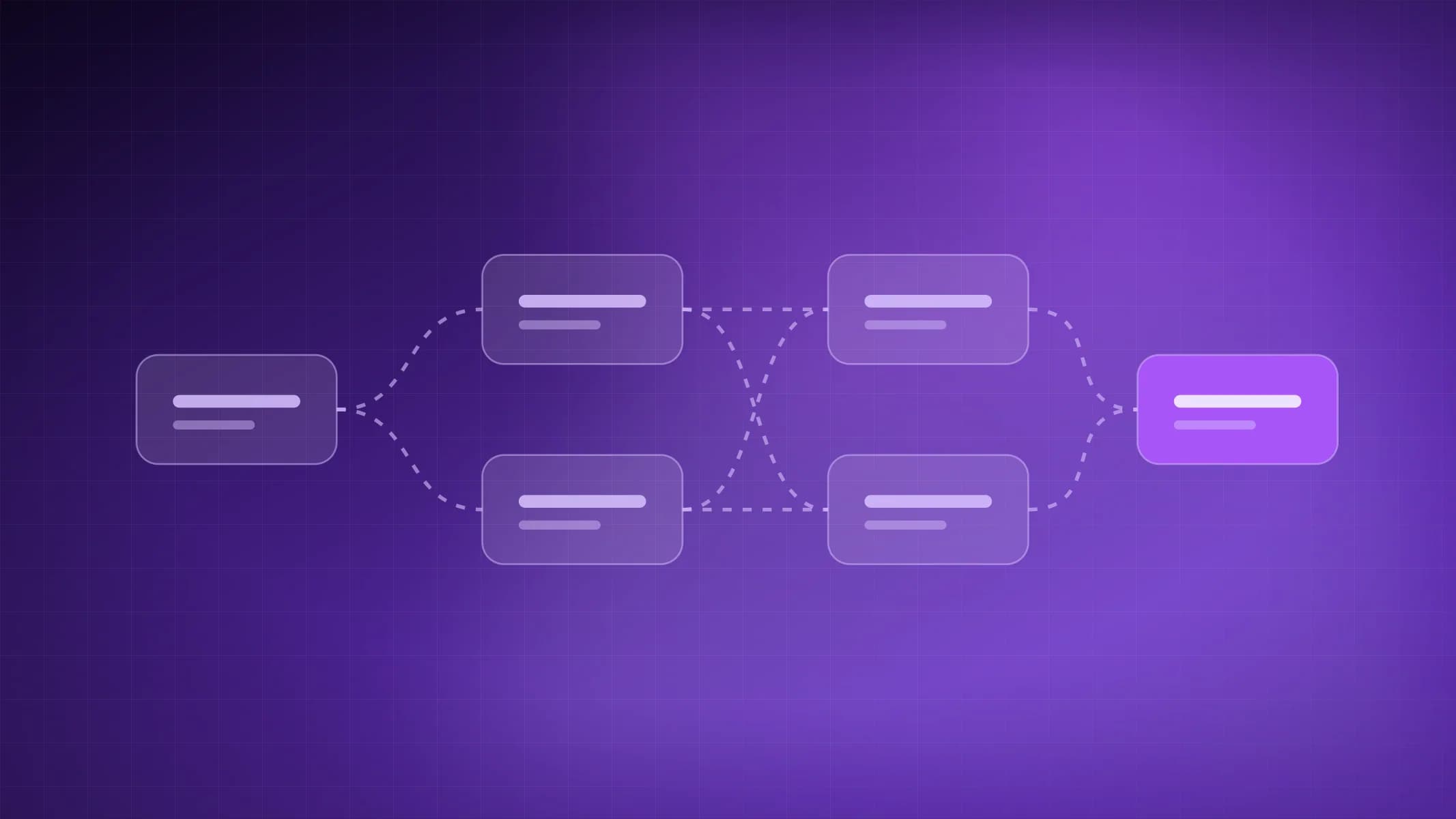
- Ingest. Documents, wikis, tickets and product data are collected and kept in sync.
- Chunk. Content is split into meaningful sections with titles and metadata preserved.
- Embed and index. Each chunk becomes a vector that captures its meaning, alongside a keyword index.
- Retrieve. When someone asks a question, the most relevant chunks are found and ranked.
- Generate. The model answers using those passages — and cites them.
Why not just fine-tune a model?
Fine-tuning teaches a model style and behaviour, but it is a poor way to store facts that change. Updating knowledge means retraining, and it is hard to trace where an answer came from. RAG keeps knowledge separate from the model: update a document and the next answer reflects it, with sources anyone can verify.
The levers that decide quality
Most disappointing RAG systems fail at retrieval, not generation. These details matter most:
- Chunking strategy — sections that respect headings and tables beat arbitrary character counts
- Hybrid search — combining semantic vectors with keyword matching catches product codes and exact terms
- Reranking — a second pass reorders candidates by true relevance
- Metadata filters — restricting results by product, region, date or user permissions
- Evaluation sets — real questions with expected answers, run on every change
Permissions are not optional
If an employee shouldn't open a document, the AI shouldn't quote it to them. Retrieval must respect the same access rules as your source systems, applied before any content reaches the model.
Common pitfalls
- Indexing outdated or contradictory documents without a clean-up pass
- Judging quality by gut feel instead of a repeatable evaluation
- Hiding sources, which makes answers hard to trust
- Guessing at questions the knowledge base can't answer — those should be escalated instead
When RAG is the right choice
RAG is ideal when answers live in documents that change, when users need traceable sources and when access control matters: customer support, internal knowledge assistants, sales enablement, compliance and technical documentation. For highly structured questions — revenue by region last quarter — pairing AI with a governed analytics layer is usually more reliable.
A good RAG system doesn't just answer. It shows its work.
- #AI
- #Knowledge management
- #RAG
 Tomasz Nowak
Insights, not noise.
One practical email a month on AI, product and growth. Unsubscribe anytime.